Know sooner
See when the broad household pattern is meaningfully different from usual rather than relying only on the next call or visit.

Enhanced Day for families
The future of independent living starts with earlier awareness.
Enhanced Day provides quiet reassurance about someone living independently at home. No cameras. No microphones. No wearables. No constant check-ins.
It learns broad household patterns and highlights meaningful change that may deserve attention, helping families feel more confident day to day while supporting independence.

Independent living is changing.
So is the way we support it.
How it helps families stay reassured
See when the broad household pattern is meaningfully different from usual rather than relying only on the next call or visit.
The person at home does not need to wear, charge, remember or operate anything day to day.
See when the day looks broadly normal and understand why the current status was shown.
Review a clear explanation of what changed and decide whether a call or other follow-up may be useful.
For many families, the need is not full-time care straight away. It is reassurance, visibility and earlier awareness before support needs escalate.
The family app
The app is designed around one monitored person, with family-friendly wording and no professional workflow clutter.
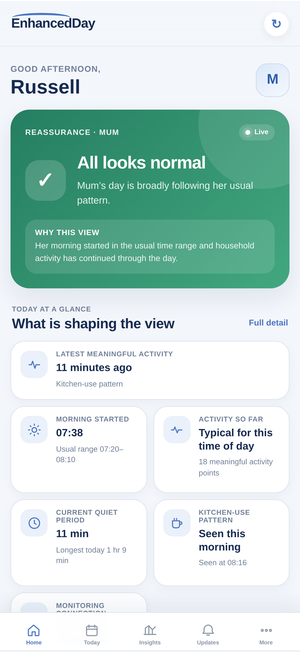
Current status, recent meaningful activity and key routine comparisons.
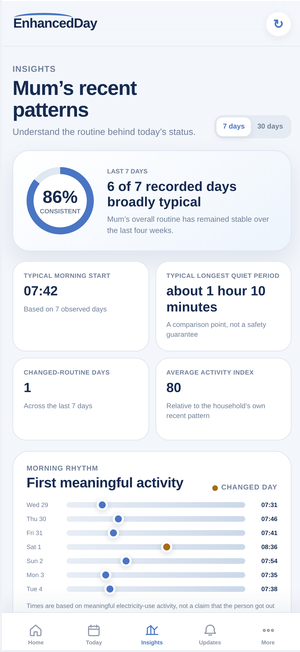
Seven-day and 30-day information showing how routine consistency is changing.
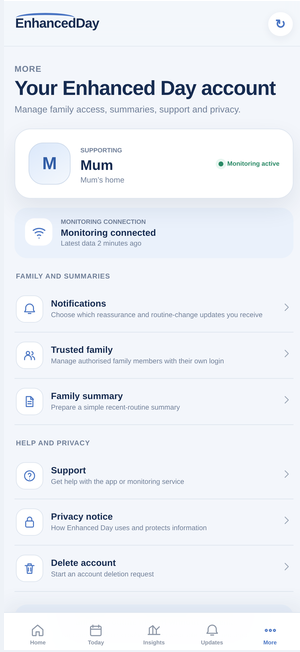
Selected-day timeline, monitoring status, quiet periods and explanation behind the status.
What families can see
Example family scenario
The morning begins later than Mum’s established range and broad household activity is lower across several days.
The app shows that the household pattern differs from usual.
Timing, quiet periods and recent comparisons help explain why the change was highlighted.
Enhanced Day provides earlier awareness. The family chooses what action is appropriate.
Privacy by design
No cameras, microphones, audio recording, live video or wearable pendants. Enhanced Day focuses on broad household activity patterns rather than watching people.
No images or live video.
No listening or recording.
Nothing to wear or charge.
30-day free trial